
Digital Violence against Women and Gender and Sexual Dissidents in Guatemala
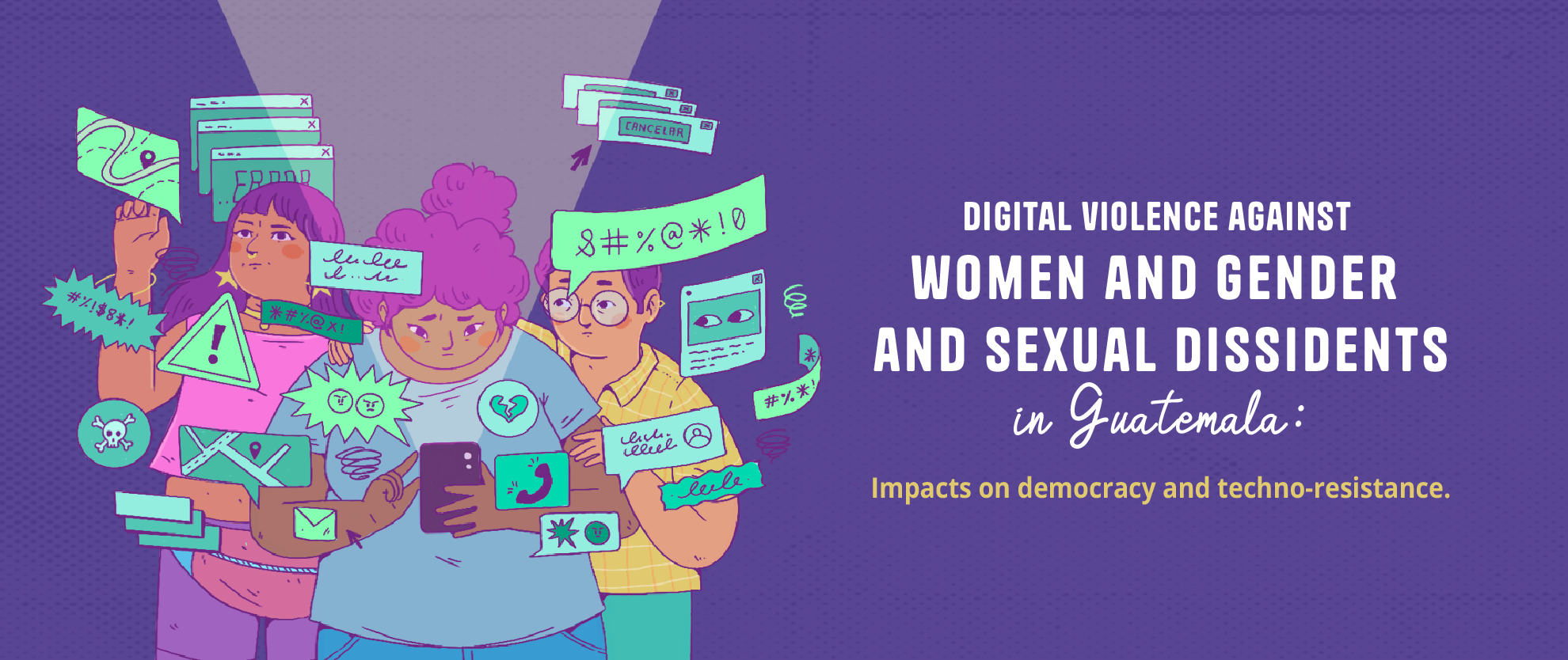
Violence against women and gender and sexual dissidents is a deep-rooted problem that continues to change and reconfigure itself in response to contextual, political, and cultural circumstances. Today, with the widespread use of the internet, social media, and digital platforms, misogynistic and hateful behaviors spread more intensely, persist for longer, and reach wider audiences. Although these forms of aggression take place in virtual spaces, their effects on people’s everyday lives are very real and often deeply painful.
While the internet is not responsible for creating misogyny or anti-LGBTQI+ hatred, it does amplify their persistence and embed them within new dynamics of power and control. Understanding this context is essential for developing organizational, political, and social responses aimed at the political and cultural transformations needed to eradicate these forms of violence.
The study Digital Violence against Women and Gender and Sexual Dissidents in Guatemala: Impacts on Democracy and Techno-Resistance was conducted as part of the Nuestras Redes Funcionan project, funded by the Digital Democracy Initiative (DDI) and implemented by the Alianza de Fondos de Mujeres y Feministas de América Latina y el Caribe.
It forms part of a collection of national and regional studies on technology-facilitated gender-based violence developed by the eight funds that make up the Alliance. The initiative seeks to strengthen the production and circulation of knowledge in order to better understand, bring visibility to, and address the different forms of violence affecting the region from feminist perspectives.